" height="1.90314px" id="wtDTm6bEW" transform="translate(26.225 0)" width="2.4723000000000006px"/><path d="M 0.557 0 L 1.438 0 C 1.746 0 1.995 0.25 1.995 0.559 L 1.995 1.344 C 1.995 1.653 1.746 1.903 1.438 1.903 L 0.557 1.903 C 0.25 1.903 0 1.653 0 1.344 L 0 0.559 C 0 0.25 0.25 0 0.557 0 Z" fill="rgb(29, 28, 27)" height="1.9031500000000001px" id="GnmDnNra_" transform="translate(36.408 2.728)" width="1.9953000000000003px"/><path d="M 6.224 0 L 0.558 0 C 0.25 0 0 0.25 0 0.559 L 0 1.344 C 0 1.653 0.25 1.903 0.558 1.903 L 6.224 1.903 C 6.531 1.903 6.781 1.653 6.781 1.344 L 6.781 0.559 C 6.781 0.25 6.531 0 6.224 0 Z" fill="rgb(29, 28, 27)" height="1.9031500000000001px" id="hKTQ3dbw4" transform="translate(34.261 5.456)" width="6.781100000000002px"/><path d="M 6.955 0 L 0.558 0 C 0.25 0 0 0.25 0 0.559 L 0 1.344 C 0 1.653 0.25 1.903 0.558 1.903 L 6.955 1.903 C 7.263 1.903 7.513 1.653 7.513 1.344 L 7.513 0.559 C 7.513 0.25 7.263 0 6.955 0 Z" fill="rgb(29, 28, 27)" height="1.9031500000000001px" id="G1Zzk9CUU" transform="translate(28.298 8.243)" width="7.513100000000001px"/><path d="M 7.123 0 L 0.558 0 C 0.25 0 0 0.25 0 0.559 L 0 1.344 C 0 1.653 0.25 1.903 0.558 1.903 L 7.123 1.903 C 7.431 1.903 7.681 1.653 7.681 1.344 L 7.681 0.559 C 7.681 0.25 7.431 0 7.123 0 Z" fill="rgb(29, 28, 27)" height="1.9030999999999985px" id="fm7cHxIfJ" transform="translate(0 10.972)" width="7.68067px"/><path d="M 13.447 0 L 0.558 0 C 0.25 0 0 0.25 0 0.559 L 0 1.344 C 0 1.653 0.25 1.903 0.558 1.903 L 13.447 1.903 C 13.755 1.903 14.004 1.653 14.004 1.344 L 14.004 0.559 C 14.004 0.25 13.755 0 13.447 0 Z" fill="rgb(29, 28, 27)" height="1.9030999999999985px" id="LowSwDrtg" transform="translate(9.552 10.972)" width="14.0044px"/><path d="M 0.558 0 L 8.212 0 C 8.52 0 8.77 0.25 8.77 0.559 L 8.77 1.344 C 8.77 1.653 8.52 1.903 8.212 1.903 L 0.558 1.903 C 0.25 1.903 0 1.653 0 1.344 L 0 0.559 C 0 0.25 0.25 0 0.558 0 Z" fill="rgb(29, 28, 27)" height="1.9030999999999985px" id="xRiKc2od7" transform="translate(27.041 10.972)" width="8.769900000000003px"/><path d="M 0.557 0 L 5.4 0 C 5.708 0 5.958 0.25 5.958 0.559 L 5.958 1.344 C 5.958 1.653 5.708 1.903 5.4 1.903 L 0.557 1.903 C 0.25 1.903 0 1.653 0 1.344 L 0 0.559 C 0 0.25 0.25 0 0.557 0 Z" fill="rgb(29, 28, 27)" height="1.9031500000000001px" id="JWdNVicde" transform="translate(36.796 8.243)" width="5.957599999999999px"/><path d="M 1.438 0 L 0.558 0 C 0.25 0 0 0.25 0 0.559 L 0 1.344 C 0 1.653 0.25 1.903 0.558 1.903 L 1.438 1.903 C 1.746 1.903 1.995 1.653 1.995 1.344 L 1.995 0.559 C 1.995 0.25 1.746 0 1.438 0 Z" fill="rgb(29, 28, 27)" height="1.9031500000000001px" id="RfFYVCT_T" transform="translate(28.717 5.456)" width="1.9953000000000003px"/><path d="M 0.558 0 L 2.895 0 C 3.203 0 3.453 0.25 3.453 0.559 L 3.453 1.406 C 3.453 1.714 3.203 1.964 2.895 1.964 L 0.558 1.964 C 0.25 1.964 0 1.714 0 1.406 L 0 0.559 C 0 0.25 0.25 0 0.558 0 Z" fill="rgb(29, 28, 27)" height="1.964299999999998px" id="dngJ6MU2p" transform="translate(16.183 24.582)" width="3.4525000000000006px"/><path d="M 1.706 0 L 0.558 0 C 0.25 0 0 0.25 0 0.559 L 0 1.406 C 0 1.714 0.25 1.964 0.558 1.964 L 1.706 1.964 C 2.014 1.964 2.263 1.714 2.263 1.406 L 2.263 0.559 C 2.263 0.25 2.014 0 1.706 0 Z" fill="rgb(29, 28, 27)" height="1.964299999999998px" id="N_fstvKmR" transform="translate(22.18 24.582)" width="2.2631999999999977px"/><path d="M 0.558 0 L 5.544 0 C 5.852 0 6.101 0.25 6.101 0.559 L 6.101 1.406 C 6.101 1.714 5.852 1.964 5.544 1.964 L 0.558 1.964 C 0.25 1.964 0 1.714 0 1.406 L 0 0.559 C 0 0.25 0.25 0 0.558 0 Z" fill="rgb(29, 28, 27)" height="1.964299999999998px" id="t55XLYcgb" transform="translate(25.486 24.582)" width="6.101399999999998px"/><path d="M 1.976 0 L 0.558 0 C 0.25 0 0 0.25 0 0.559 L 0 1.406 C 0 1.714 0.25 1.964 0.558 1.964 L 1.976 1.964 C 2.284 1.964 2.533 1.714 2.533 1.406 L 2.533 0.559 C 2.533 0.25 2.284 0 1.976 0 Z" fill="rgb(29, 28, 27)" height="1.964299999999998px" id="ZrEKTVTAe" transform="translate(28.542 21.854)" width="2.5334000000000003px"/><path d="M 0.557 0 L 1.438 0 C 1.746 0 1.995 0.25 1.995 0.559 L 1.995 1.406 C 1.995 1.714 1.746 1.964 1.438 1.964 L 0.557 1.964 C 0.25 1.964 0 1.714 0 1.406 L 0 0.559 C 0 0.25 0.25 0 0.557 0 Z" fill="rgb(29, 28, 27)" height="1.964299999999998px" id="Z0fPTp9aR" transform="translate(11.425 24.582)" width="1.9953000000000003px"/><path d="M 0 0.559 C 0 0.251 0.251 0 0.558 0 L 1.438 0 C 1.745 0 1.995 0.251 1.995 0.559 L 1.995 1.405 C 1.995 1.713 1.745 1.964 1.438 1.964 L 0.558 1.964 C 0.251 1.964 0 1.713 0 1.405 Z" fill="rgb(29, 28, 27)" height="1.964299999999998px" id="Tj_PDHFDh" transform="translate(20.635 27.308)" width="1.9954px"/><path d="M 0.557 0 L 1.342 0 C 1.65 0 1.899 0.25 1.899 0.559 L 1.899 1.406 C 1.899 1.714 1.65 1.964 1.342 1.964 L 0.557 1.964 C 0.25 1.964 0 1.714 0 1.406 L 0 0.559 C 0 0.25 0.25 0 0.557 0 Z" fill="rgb(29, 28, 27)" height="1.9643000000000015px" id="AYq9dXkKz" transform="translate(18.686 30.036)" width="1.8994px"/><path d="M 0.558 0 L 5.768 0 C 6.076 0 6.326 0.25 6.326 0.559 L 6.326 1.344 C 6.326 1.653 6.076 1.903 5.768 1.903 L 0.558 1.903 C 0.25 1.903 0 1.653 0 1.344 L 0 0.559 C 0 0.25 0.25 0 0.558 0 Z" fill="rgb(29, 28, 27)" height="1.9031500000000001px" id="rspevfJcx" transform="translate(12.157 8.243)" width="6.325900000000001px"/><path d="M 3.285 0 L 0.558 0 C 0.25 0 0 0.25 0 0.559 L 0 1.344 C 0 1.653 0.25 1.903 0.558 1.903 L 3.285 1.903 C 3.593 1.903 3.842 1.653 3.842 1.344 L 3.842 0.559 C 3.842 0.25 3.593 0 3.285 0 Z" fill="rgb(29, 28, 27)" height="1.9031500000000001px" id="XRUAhGnph" transform="translate(23.887 2.728)" width="3.8424000000000014px"/><path d="M 0.558 0 L 5.644 0 C 5.952 0 6.202 0.25 6.202 0.559 L 6.202 1.344 C 6.202 1.653 5.952 1.903 5.644 1.903 L 0.558 1.903 C 0.25 1.903 0 1.653 0 1.344 L 0 0.559 C 0 0.25 0.25 0 0.558 0 Z" fill="rgb(29, 28, 27)" height="1.9031500000000001px" id="VsaVVIfke" transform="translate(21.528 5.456)" width="6.201600000000003px"/><path d="M 3.06 0 L 0.558 0 C 0.25 0 0 0.25 0 0.559 L 0 1.344 C 0 1.653 0.25 1.903 0.558 1.903 L 3.06 1.903 C 3.369 1.903 3.618 1.653 3.618 1.344 L 3.618 0.559 C 3.618 0.25 3.369 0 3.06 0 Z" fill="rgb(29, 28, 27)" height="1.9030999999999985px" id="wiAKEgyId" transform="translate(40.819 10.972)" width="3.6182000000000016px"/><path d="M 0.558 0 L 17.318 0 C 17.626 0 17.875 0.25 17.875 0.559 L 17.875 1.345 C 17.875 1.653 17.626 1.903 17.318 1.903 L 0.558 1.903 C 0.25 1.903 0 1.653 0 1.345 L 0 0.559 C 0 0.25 0.25 0 0.558 0 Z" fill="rgb(29, 28, 27)" height="1.9032px" id="FIE0ufK9m" transform="translate(6.666 13.7)" width="17.87506px"/><path d="M 6.426 0 L 0.558 0 C 0.25 0 0 0.25 0 0.559 L 0 1.345 C 0 1.653 0.25 1.903 0.558 1.903 L 6.426 1.903 C 6.734 1.903 6.984 1.653 6.984 1.345 L 6.984 0.559 C 6.984 0.25 6.734 0 6.426 0 Z" fill="rgb(29, 28, 27)" height="1.9032000000000018px" id="ut9UWny3L" transform="translate(22.892 19.156)" width="6.983599999999999px"/><path d="M 0.558 0 L 22.151 0 C 22.459 0 22.709 0.25 22.709 0.559 L 22.709 1.344 C 22.709 1.653 22.459 1.903 22.151 1.903 L 0.558 1.903 C 0.25 1.903 0 1.653 0 1.344 L 0 0.559 C 0 0.25 0.25 0 0.558 0 Z" fill="rgb(29, 28, 27)" height="1.9030999999999985px" id="VULnffgbk" transform="translate(9.552 16.428)" width="22.7089px"/><path d="M 7.886 0 L 0.558 0 C 0.25 0 0 0.25 0 0.559 L 0 1.345 C 0 1.653 0.25 1.903 0.558 1.903 L 7.886 1.903 C 8.194 1.903 8.443 1.653 8.443 1.345 L 8.443 0.559 C 8.443 0.25 8.194 0 7.886 0 Z" fill="rgb(29, 28, 27)" height="1.9032000000000018px" id="adZTYr4MR" transform="translate(6.078 19.156)" width="8.44303px"/><path d="M 0.558 0 L 2.211 0 C 2.519 0 2.769 0.25 2.769 0.559 L 2.769 1.406 C 2.769 1.714 2.519 1.964 2.211 1.964 L 0.558 1.964 C 0.25 1.964 0 1.714 0 1.406 L 0 0.559 C 0 0.25 0.25 0 0.558 0 Z" fill="rgb(29, 28, 27)" height="1.964299999999998px" id="bwdUdEmCH" transform="translate(13.784 21.854)" width="2.768600000000001px"/><path d="M 2.424 0 L 0.558 0 C 0.25 0 0 0.25 0 0.559 L 0 1.406 C 0 1.714 0.25 1.964 0.558 1.964 L 2.424 1.964 C 2.732 1.964 2.982 1.714 2.982 1.406 L 2.982 0.559 C 2.982 0.25 2.732 0 2.424 0 Z" fill="rgb(29, 28, 27)" height="1.964299999999998px" id="PUvesMJEj" transform="translate(23.556 21.854)" width="2.982199999999999px"/><path d="M 0.558 0 L 2.241 0 C 2.55 0 2.799 0.25 2.799 0.559 L 2.799 1.406 C 2.799 1.714 2.55 1.964 2.241 1.964 L 0.558 1.964 C 0.25 1.964 0 1.714 0 1.406 L 0 0.559 C 0 0.25 0.25 0 0.558 0 Z" fill="rgb(29, 28, 27)" height="1.964299999999998px" id="Wo2W7J3Zj" transform="translate(8.672 21.854)" width="2.799050000000001px"/><path d="M 6.661 0 L 0.558 0 C 0.25 0 0 0.25 0 0.559 L 0 1.345 C 0 1.653 0.25 1.903 0.558 1.903 L 6.661 1.903 C 6.969 1.903 7.219 1.653 7.219 1.345 L 7.219 0.559 C 7.219 0.25 6.969 0 6.661 0 Z" fill="rgb(29, 28, 27)" height="1.9032px" id="PpPVZXp9j" transform="translate(27.041 13.7)" width="7.218900000000001px"/><path d="M 0.621 1.905 C 0.218 1.905 0 1.687 0 1.283 L 0 0.622 C 0 0.218 0.218 0 0.621 0 L 11.225 0 C 11.628 0 11.846 0.218 11.846 0.622 L 11.846 1.283 C 11.846 1.687 11.628 1.905 11.225 1.905 L 6.934 1.905 L 6.934 14.926 C 6.934 15.33 6.716 15.548 6.313 15.548 L 5.537 15.548 C 5.134 15.548 4.916 15.33 4.916 14.926 L 4.916 1.905 Z" fill="rgb(29, 28, 27)" height="15.54825px" id="xr32fxeO6" transform="translate(52.177 8.243)" width="11.845599999999997px"/><path d="M 0.621 0 C 0.218 0 0 0.218 0 0.622 L 0 14.924 C 0 15.328 0.218 15.546 0.621 15.546 L 1.357 15.546 C 1.76 15.546 1.978 15.328 1.978 14.924 L 1.978 0.622 C 1.978 0.218 1.76 0 1.357 0 Z" fill="rgb(29, 28, 27)" height="15.546050000000001px" id="oSsO_UPVN" transform="translate(90.476 8.243)" width="1.9779000000000053px"/><path d="M 0.62 15.546 C 0.217 15.546 0 15.328 0 14.924 L 0 0.622 C 0 0.218 0.217 0 0.62 0 L 1.396 0 C 1.799 0 2.017 0.218 2.017 0.622 L 2.017 13.632 L 8.981 13.632 C 9.384 13.632 9.602 13.85 9.602 14.254 L 9.602 14.924 C 9.602 15.328 9.384 15.546 8.981 15.546 Z" fill="rgb(29, 28, 27)" height="15.546050000000001px" id="Sgj4z5osO" transform="translate(116.749 8.243)" width="9.602000000000004px"/><path d="M 1.974 14.924 C 1.974 15.328 1.756 15.546 1.353 15.546 L 0.621 15.546 C 0.218 15.546 0 15.328 0 14.924 L 0 0.622 C 0 0.218 0.218 0 0.621 0 L 1.357 0 C 1.76 0 1.978 0.218 1.978 0.622 L 1.978 5.747 C 2.634 4.721 3.806 4.079 5.309 4.079 C 8.18 4.079 10.356 6.358 10.356 9.948 C 10.356 13.538 8.18 15.817 5.309 15.817 C 3.801 15.817 2.627 15.175 1.971 14.145 L 1.971 14.922 Z M 8.36 9.95 C 8.36 7.362 6.881 5.928 5.121 5.928 C 3.361 5.928 1.863 7.362 1.863 9.95 C 1.863 12.539 3.361 13.972 5.121 13.972 C 6.881 13.972 8.36 12.539 8.36 9.95 Z" fill="rgb(29, 28, 27)" height="15.81665px" id="q13jjj7xd" transform="translate(138.401 8.243)" width="10.355999999999995px"/><path d="M 4.457 11.738 C 0.961 11.738 -0.019 9.872 0 8.318 C 0.005 7.929 0.253 7.735 0.645 7.735 L 1.344 7.735 C 1.748 7.735 1.922 7.949 1.961 8.352 C 2.063 9.315 2.693 9.907 4.433 9.907 C 6.174 9.907 7.012 9.269 7.012 8.289 C 7.012 7.425 6.522 7.108 5.305 6.899 L 3.209 6.539 C 1.453 6.238 0.29 5.247 0.29 3.468 C 0.29 1.467 1.774 0 4.518 0 C 7.263 0 8.838 1.491 8.814 3.23 C 8.81 3.614 8.553 3.808 8.165 3.808 L 7.457 3.808 C 7.054 3.808 6.908 3.595 6.851 3.202 C 6.749 2.477 6.159 1.818 4.518 1.818 C 2.878 1.818 2.249 2.508 2.249 3.403 C 2.249 4.175 2.695 4.516 3.81 4.714 L 5.906 5.083 C 7.72 5.404 8.98 6.292 8.98 8.198 C 8.98 9.976 7.908 11.74 4.455 11.74 Z" fill="rgb(29, 28, 27)" height="11.739799999999999px" id="tJ8syeWTW" transform="translate(150.024 12.325)" width="8.980269730401375px"/><path d="M 9.146 7.997 C 9.146 8.813 9.175 9.983 9.282 10.799 C 9.334 11.223 9.155 11.465 8.728 11.465 L 8.068 11.465 C 7.685 11.465 7.467 11.319 7.428 11.022 L 7.317 10.181 C 6.724 11.157 5.565 11.659 4.145 11.659 C 1.579 11.659 0 10.142 0 8.078 C 0 6.27 1.27 5.157 3.433 5.002 L 6.589 4.78 C 7.162 4.741 7.186 4.688 7.186 4.153 L 7.186 3.682 C 7.186 2.438 6.434 1.807 4.79 1.807 C 3.145 1.807 2.472 2.425 2.405 3.289 C 2.376 3.697 2.235 3.916 1.823 3.916 L 1.067 3.916 C 0.675 3.916 0.427 3.717 0.422 3.328 C 0.407 1.51 1.74 0 4.792 0 C 7.798 0 9.162 1.427 9.155 3.736 Z M 7.188 7.298 L 7.188 6.244 C 6.955 6.327 6.678 6.386 6.363 6.415 L 3.598 6.676 C 2.59 6.775 1.997 7.163 1.997 8.099 L 1.999 8.099 C 1.999 9.188 2.886 9.97 4.4 9.97 C 6.169 9.97 7.188 8.9 7.188 7.298 Z" fill="rgb(29, 28, 27)" height="11.658999999999999px" id="QPESIZvku" transform="translate(126.854 12.325)" width="9.290755130109668px"/><path d="M 5.224 0 C 8.313 0 10.295 2.255 10.295 5.456 L 10.295 5.694 C 10.295 6.098 10.077 6.316 9.674 6.316 L 1.998 6.316 C 2.168 8.547 3.447 9.898 5.407 9.898 C 6.768 9.898 7.598 9.363 7.934 8.431 C 8.06 8.078 8.243 7.892 8.618 7.892 L 9.33 7.892 C 9.746 7.892 9.994 8.125 9.923 8.538 C 9.598 10.433 7.834 11.74 5.409 11.74 L 5.407 11.738 C 2.168 11.738 0 9.424 0 5.797 C 0 2.169 2.135 0 5.224 0 Z M 5.222 1.74 C 3.494 1.74 2.405 2.818 2.074 4.64 L 8.282 4.64 C 8.054 2.842 6.949 1.74 5.222 1.74 Z" fill="rgb(29, 28, 27)" height="11.739799999999999px" id="PKmyQkwJE" transform="translate(104.541 12.325)" width="10.295000000000002px"/><path d="M 4.459 11.194 C 4.099 11.194 3.877 11.039 3.746 10.703 L 0.091 1.021 C -0.024 0.72 -0.031 0.511 0.076 0.297 C 0.178 0.094 0.381 0 0.732 0 L 1.274 0 C 1.633 0 1.86 0.155 1.986 0.495 L 4.958 8.503 L 5.123 9.018 L 5.289 8.503 L 8.262 0.495 C 8.388 0.155 8.615 0 8.974 0 L 9.517 0 C 9.865 0 10.07 0.092 10.172 0.297 C 10.279 0.511 10.275 0.72 10.157 1.021 L 6.502 10.703 C 6.371 11.039 6.149 11.194 5.79 11.194 Z" fill="rgb(29, 28, 27)" height="11.1941px" id="uUQr5Yl4B" transform="translate(93.807 12.595)" width="10.248961642504256px"/><path d="M 5.407 11.738 C 2.167 11.738 0 9.424 0 5.797 C 0 2.169 2.133 0 5.221 0 C 8.31 0 10.292 2.255 10.292 5.456 L 10.292 5.694 C 10.292 6.098 10.075 6.316 9.672 6.316 L 1.995 6.316 C 2.165 8.547 3.446 9.898 5.404 9.898 C 6.768 9.898 7.596 9.363 7.931 8.431 C 8.058 8.078 8.241 7.892 8.615 7.892 L 9.328 7.892 C 9.744 7.892 9.992 8.125 9.918 8.538 C 9.593 10.433 7.829 11.74 5.404 11.74 Z M 8.282 4.64 C 8.053 2.842 6.949 1.74 5.221 1.74 C 3.494 1.74 2.405 2.818 2.074 4.64 Z" fill="rgb(29, 28, 27)" height="11.739799999999999px" id="zo1nSBuSF" transform="translate(78.397 12.325)" width="10.29249999999999px"/><path d="M 3.057 10.677 C 3.163 11.026 3.392 11.192 3.756 11.192 L 3.749 11.194 L 4.987 11.194 C 5.35 11.194 5.579 11.028 5.69 10.679 L 8.173 2.654 L 8.237 2.401 L 8.3 2.654 L 10.787 10.679 C 10.894 11.028 11.123 11.194 11.487 11.194 L 12.733 11.194 C 13.096 11.194 13.325 11.028 13.432 10.679 L 16.418 1.006 C 16.516 0.7 16.512 0.498 16.41 0.288 C 16.307 0.089 16.109 0.002 15.76 0.002 L 15.218 0.002 C 14.848 0.002 14.626 0.168 14.519 0.522 L 12.094 8.547 L 12.046 8.761 L 11.999 8.542 L 9.506 0.517 C 9.4 0.168 9.171 0.002 8.807 0.002 L 7.683 0.002 C 7.319 0.002 7.091 0.168 6.984 0.517 L 4.492 8.542 L 4.449 8.745 L 4.405 8.551 L 1.98 0.519 C 1.874 0.166 1.649 0 1.281 0 L 0.728 0 C 0.38 0 0.181 0.087 0.079 0.286 C -0.021 0.493 -0.028 0.698 0.07 1.004 Z" fill="rgb(29, 28, 27)" height="11.194099999999999px" id="uboloLX99" transform="translate(61.282 12.598)" width="16.489163442184434px"/></svg>)
パートナーシップ
Unlock Your Media Archive: Funded Migration and AI-Powered Search

Allyson Gottlieb
TwelveLabs, AWS, Iconik by Backlight, and Cloudfirst have built a funded program that turns unsearchable media archives into licensable, monetizable content.
TwelveLabs, AWS, Iconik by Backlight, and Cloudfirst have built a funded program that turns unsearchable media archives into licensable, monetizable content.
2026/08/03
8 minutes
記事へのリンクをコピー
There's a quiet crisis happening in the media industry: petabytes of footage, sitting in vaults and on shelves, that companies can't search, can't access, and in many cases don't even know they have. Demand for licensable, AI-ready video content has never been higher, and the organizations that can move fast are already locking up the licensing relationships. For everyone else, the window is open, but it isn't going to stay open forever.
That was the premise of a recent panel bringing together perspectives from TwelveLabs, Amazon Web Services (AWS), Iconik by Backlight, and Cloudfirst — four companies that, together, cover the full journey of taking content from on-premise archive to searchable, monetizable asset. Here's what they had to say about why this moment is different, how the economics work, and what it actually takes to get started.
If you’d prefer to hear from the panelists directly, the on-demand recording is available now.
Why Archives Are Both a Crisis and an Opportunity Right Now
For years, the case for archive modernization was about obsolescence: aging LTO tape, degrading film stock, hardware that nobody could service anymore. That's still true, but it's no longer the main driver. When generative AI tools can enrich an archive with structured metadata and semantic understanding, previously invisible content suddenly becomes discoverable. That shift has turned archives from a storage cost into an untapped monetization opportunity.
What started as six or seven identified use cases for archive migration has grown to nearly 25 distinct monetization paths in under two years. Part of the urgency is generational; 88% of Gen Z now consumes video on a smartphone weekly, more than on any other device. Reaching those audiences increasingly means having a searchable, repackageable content library rather than a static one.
So why do so many modernization efforts stall before they get there? Usually because companies run a narrow, apples-to-apples comparison — the cost of on-premise tape storage against the cost of cloud storage — that misses the point entirely. What actually pays off is the transformation: content that's immediately usable, because it's been enriched with real metadata instead of left undiscoverable.
Without flipping that model, organizations stay stuck, unable to justify a move that looks expensive on paper but actually unlocks value that was never priced in.
How the Funded Program Works
To remove that friction, AWS has created a bundled program, bringing together vendors spanning migration, storage, indexing, and search. Qualified content moves into Amazon S3 as the foundation, gets indexed by AI-powered video intelligence, and becomes searchable through a modern media asset management layer. The program comes with promotional pricing and funding support for large-scale digitization and migration projects.
Media companies are used to long-term, capital-intensive infrastructure spending with predictable annual increases. Moving to a usage-based operating expense model feels uncertain by comparison, but that discomfort is usually about the spending model, not the actual math.
There's also a scale reality to plan around; most companies can't pause their operations to accommodate moving petabytes of data. To mitigate, companies like Cloudfirst that run these migrations as a managed service will pull resources dynamically from existing infrastructure, protecting live workflows. A full migration often runs 12 to 18 months, depending on how much bandwidth can be devoted to it without disrupting the business’s day-to-day.
The upside is that none of the downstream work has to wait for the migration to finish — indexing, cataloguing, and workflow migration can happen asset-by-asset as content lands in the cloud, often starting with the highest-value or most time-sensitive categories, like a newsroom archive.
From Raw Footage to Searchable Asset
Once content lands in cloud storage, TwelveLabs' video-native AI models index it dramatically faster than real time, producing both a multimodal embedding that powers semantic search and text-based metadata like summaries, labels, and ad-break markers.
Traditional keyword tagging can only surface what was manually labeled, which is inherently limited by whoever did the tagging and what they thought to record. Modern video indexing, such as TwelveLabs Marengo, can go far beyond that: searching for a specific entity in a specific action (not just "the athlete" but "the athlete dunking," distinguished from "the athlete being dunked on"), or even something as abstract as unresolved emotional tension in a scene.
For companies that already have some metadata, AI indexing builds directly on top of it, enriching what's already there rather than replacing it. Because the leading platforms in this space are API-first, indexed content flows directly into the tools editors and licensing teams already use day to day, and legacy metadata becomes additional searchable tags.
As content moves into AWS, it can be triaged by type, with different footage routed to different storage tiers and given different indexing treatments. A skeleton record is created in the media asset management system as soon as an asset lands, pointing to where it lives and what tier it's on, with the full metadata filled in once indexing finishes. That triage step is what lets migration and indexing run in parallel.
Crucially, none of this locks a company into a new vendor relationship. The underlying data belongs to the content owner, accessible through open APIs regardless of the tools used downstream.
What Good Looks Like: Results from the Field
One broadcaster saw a 10x increase in metadata coverage, opening content reuse and licensing pathways that had been inaccessible simply because nobody could parse the volume and inconsistency of the legacy metadata. But the more common revelation is less about a single metric and more about the sheer scale of surprise, as organizations regularly discover they're sitting on content — decades-old interviews, footage nobody remembered archiving — they didn't know existed.
Assessing actual archive utilization often reveals that organizations use far less of their content than they assume. After an audit, one major sports organization, whose brand is closely associated with a single star athlete, discovered it had used the same ten images of that player across five years of promotional material. Once that gap closes, the "aha" moment tends to be immediate and consistent — the realization that archived content can be just as accessible as something shot yesterday, freeing teams from hoarding local copies and letting them search the full library instead of working from memory.
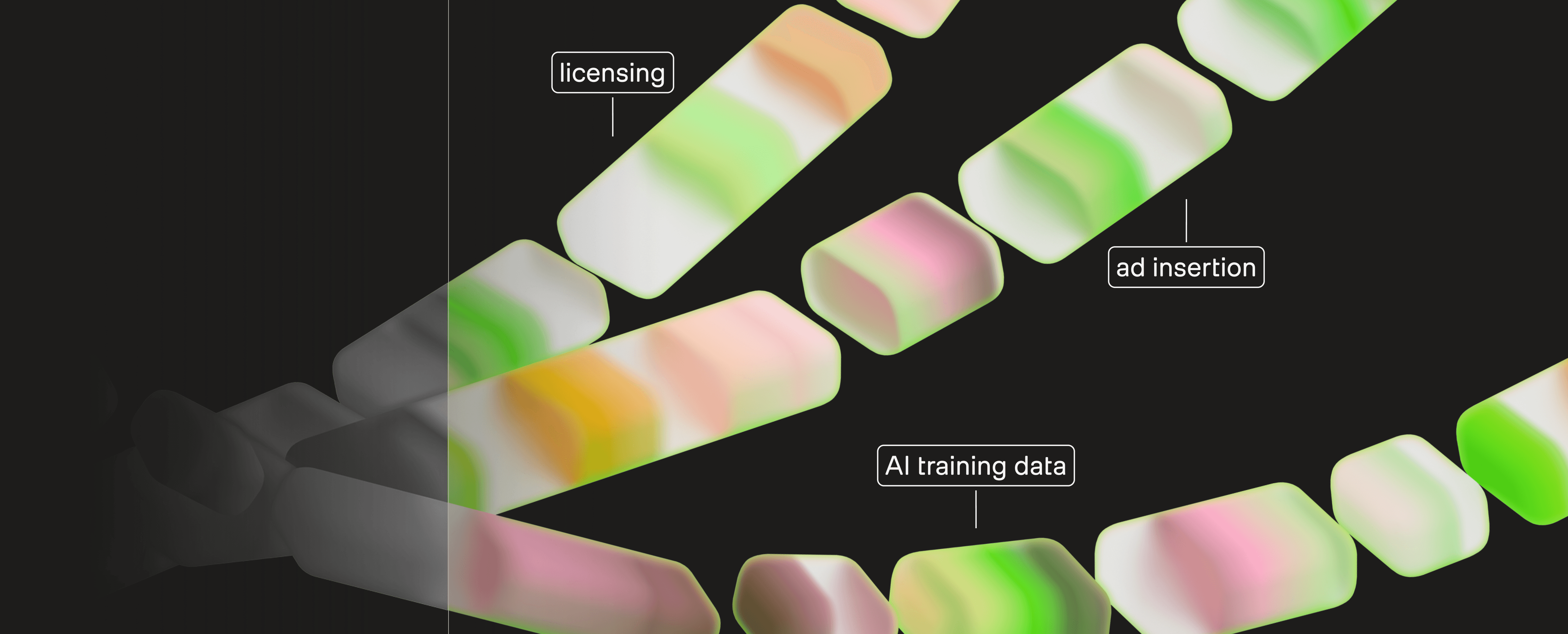
Unexpected buyers surface, too. Beyond the obvious licensing and highlight-reel use cases, indexed archives are increasingly being sold to or used for training foundation models, powering contextual and dynamic ad insertion, enabling in-content product placement sales, supplying themed content to FAST channel operators, and accelerating AI-powered localization and dubbing. Compliance use cases are a particularly under-appreciated benefit of having structured, searchable metadata, spanning everything from brand safety to region-specific content requirements or local broadcast rules to legal teams using archival footage as evidence.
Is This Right for You? Getting Started
None of this requires an all-or-nothing commitment. The advice across the board was consistent — don't try to solve the entire archive at once. Pick a specific content category or business use case, prove the ROI, build momentum, and expand from there. Treating petabytes of legacy content as a single, undifferentiated problem is exactly what causes migration projects to stall before they get off the ground.
A few warnings for anyone in the evaluation phase: be wary of using a legacy archive provider as the migration gateway to the cloud, since that risks re-locking content into the same proprietary constraints. And be realistic about whether an internal engineering team is the right group to run a specialized migration. Even if they're technically capable, it's rarely the best use of their time.
Not ready to commit to a full migration? Start with a proof-of-concept: run a metadata enrichment pass against a small percentage of your library, targeting two or three specific use cases, and see what it turns up before committing further. Cloud infrastructure makes this cheap to try and easy to walk back if it doesn't pan out. Hybrid setups work too, keeping high-resolution masters in existing storage while building searchable intelligence from proxy files in the cloud.
Program at a Glance
Storage foundation | Qualified content moves into Amazon S3 |
Indexing | AI-powered video intelligence |
Search layer | Modern media asset management |
Commercial support | Promotional pricing and funding for large-scale digitization and migration |
Typical migration timeline | 12 to 18 months, depending on available bandwidth |
Operating model | Usage-based operating expense rather than capital spend |
Migration approach | Managed service pulling resources dynamically to protect live workflows |
Data ownership | Belongs to the content owner, accessible through open APIs |
Lower-commitment entry | Proof-of-concept enrichment pass, or hybrid setup with masters on-prem |
The core message, repeated in different forms throughout the conversation, is that the cost of waiting compounds as archives continue to grow. Every additional year on the sidelines is a year that your content still isn’t earning anything.
The window described at the outset is still open. The organizations now moving through it are turning content that was previously just sitting there into new revenue, while everyone else is still running the numbers on data tape.
Curious whether your archive qualifies for funded migration, indexing, and search? Get in touch.
There's a quiet crisis happening in the media industry: petabytes of footage, sitting in vaults and on shelves, that companies can't search, can't access, and in many cases don't even know they have. Demand for licensable, AI-ready video content has never been higher, and the organizations that can move fast are already locking up the licensing relationships. For everyone else, the window is open, but it isn't going to stay open forever.
That was the premise of a recent panel bringing together perspectives from TwelveLabs, Amazon Web Services (AWS), Iconik by Backlight, and Cloudfirst — four companies that, together, cover the full journey of taking content from on-premise archive to searchable, monetizable asset. Here's what they had to say about why this moment is different, how the economics work, and what it actually takes to get started.
If you’d prefer to hear from the panelists directly, the on-demand recording is available now.
Why Archives Are Both a Crisis and an Opportunity Right Now
For years, the case for archive modernization was about obsolescence: aging LTO tape, degrading film stock, hardware that nobody could service anymore. That's still true, but it's no longer the main driver. When generative AI tools can enrich an archive with structured metadata and semantic understanding, previously invisible content suddenly becomes discoverable. That shift has turned archives from a storage cost into an untapped monetization opportunity.
What started as six or seven identified use cases for archive migration has grown to nearly 25 distinct monetization paths in under two years. Part of the urgency is generational; 88% of Gen Z now consumes video on a smartphone weekly, more than on any other device. Reaching those audiences increasingly means having a searchable, repackageable content library rather than a static one.
So why do so many modernization efforts stall before they get there? Usually because companies run a narrow, apples-to-apples comparison — the cost of on-premise tape storage against the cost of cloud storage — that misses the point entirely. What actually pays off is the transformation: content that's immediately usable, because it's been enriched with real metadata instead of left undiscoverable.
Without flipping that model, organizations stay stuck, unable to justify a move that looks expensive on paper but actually unlocks value that was never priced in.
How the Funded Program Works
To remove that friction, AWS has created a bundled program, bringing together vendors spanning migration, storage, indexing, and search. Qualified content moves into Amazon S3 as the foundation, gets indexed by AI-powered video intelligence, and becomes searchable through a modern media asset management layer. The program comes with promotional pricing and funding support for large-scale digitization and migration projects.
Media companies are used to long-term, capital-intensive infrastructure spending with predictable annual increases. Moving to a usage-based operating expense model feels uncertain by comparison, but that discomfort is usually about the spending model, not the actual math.
There's also a scale reality to plan around; most companies can't pause their operations to accommodate moving petabytes of data. To mitigate, companies like Cloudfirst that run these migrations as a managed service will pull resources dynamically from existing infrastructure, protecting live workflows. A full migration often runs 12 to 18 months, depending on how much bandwidth can be devoted to it without disrupting the business’s day-to-day.
The upside is that none of the downstream work has to wait for the migration to finish — indexing, cataloguing, and workflow migration can happen asset-by-asset as content lands in the cloud, often starting with the highest-value or most time-sensitive categories, like a newsroom archive.
From Raw Footage to Searchable Asset
Once content lands in cloud storage, TwelveLabs' video-native AI models index it dramatically faster than real time, producing both a multimodal embedding that powers semantic search and text-based metadata like summaries, labels, and ad-break markers.
Traditional keyword tagging can only surface what was manually labeled, which is inherently limited by whoever did the tagging and what they thought to record. Modern video indexing, such as TwelveLabs Marengo, can go far beyond that: searching for a specific entity in a specific action (not just "the athlete" but "the athlete dunking," distinguished from "the athlete being dunked on"), or even something as abstract as unresolved emotional tension in a scene.
For companies that already have some metadata, AI indexing builds directly on top of it, enriching what's already there rather than replacing it. Because the leading platforms in this space are API-first, indexed content flows directly into the tools editors and licensing teams already use day to day, and legacy metadata becomes additional searchable tags.
As content moves into AWS, it can be triaged by type, with different footage routed to different storage tiers and given different indexing treatments. A skeleton record is created in the media asset management system as soon as an asset lands, pointing to where it lives and what tier it's on, with the full metadata filled in once indexing finishes. That triage step is what lets migration and indexing run in parallel.
Crucially, none of this locks a company into a new vendor relationship. The underlying data belongs to the content owner, accessible through open APIs regardless of the tools used downstream.
What Good Looks Like: Results from the Field
One broadcaster saw a 10x increase in metadata coverage, opening content reuse and licensing pathways that had been inaccessible simply because nobody could parse the volume and inconsistency of the legacy metadata. But the more common revelation is less about a single metric and more about the sheer scale of surprise, as organizations regularly discover they're sitting on content — decades-old interviews, footage nobody remembered archiving — they didn't know existed.
Assessing actual archive utilization often reveals that organizations use far less of their content than they assume. After an audit, one major sports organization, whose brand is closely associated with a single star athlete, discovered it had used the same ten images of that player across five years of promotional material. Once that gap closes, the "aha" moment tends to be immediate and consistent — the realization that archived content can be just as accessible as something shot yesterday, freeing teams from hoarding local copies and letting them search the full library instead of working from memory.
Unexpected buyers surface, too. Beyond the obvious licensing and highlight-reel use cases, indexed archives are increasingly being sold to or used for training foundation models, powering contextual and dynamic ad insertion, enabling in-content product placement sales, supplying themed content to FAST channel operators, and accelerating AI-powered localization and dubbing. Compliance use cases are a particularly under-appreciated benefit of having structured, searchable metadata, spanning everything from brand safety to region-specific content requirements or local broadcast rules to legal teams using archival footage as evidence.
Is This Right for You? Getting Started
None of this requires an all-or-nothing commitment. The advice across the board was consistent — don't try to solve the entire archive at once. Pick a specific content category or business use case, prove the ROI, build momentum, and expand from there. Treating petabytes of legacy content as a single, undifferentiated problem is exactly what causes migration projects to stall before they get off the ground.
A few warnings for anyone in the evaluation phase: be wary of using a legacy archive provider as the migration gateway to the cloud, since that risks re-locking content into the same proprietary constraints. And be realistic about whether an internal engineering team is the right group to run a specialized migration. Even if they're technically capable, it's rarely the best use of their time.
Not ready to commit to a full migration? Start with a proof-of-concept: run a metadata enrichment pass against a small percentage of your library, targeting two or three specific use cases, and see what it turns up before committing further. Cloud infrastructure makes this cheap to try and easy to walk back if it doesn't pan out. Hybrid setups work too, keeping high-resolution masters in existing storage while building searchable intelligence from proxy files in the cloud.
Program at a Glance
Storage foundation | Qualified content moves into Amazon S3 |
Indexing | AI-powered video intelligence |
Search layer | Modern media asset management |
Commercial support | Promotional pricing and funding for large-scale digitization and migration |
Typical migration timeline | 12 to 18 months, depending on available bandwidth |
Operating model | Usage-based operating expense rather than capital spend |
Migration approach | Managed service pulling resources dynamically to protect live workflows |
Data ownership | Belongs to the content owner, accessible through open APIs |
Lower-commitment entry | Proof-of-concept enrichment pass, or hybrid setup with masters on-prem |
The core message, repeated in different forms throughout the conversation, is that the cost of waiting compounds as archives continue to grow. Every additional year on the sidelines is a year that your content still isn’t earning anything.
The window described at the outset is still open. The organizations now moving through it are turning content that was previously just sitting there into new revenue, while everyone else is still running the numbers on data tape.
Curious whether your archive qualifies for funded migration, indexing, and search? Get in touch.



プラットフォーム
©
2026年
TwelveLabs, Inc. All Rights Reserved.

プラットフォーム
©
2026年
TwelveLabs, Inc. All Rights Reserved.

プラットフォーム
©
2026年
TwelveLabs, Inc. All Rights Reserved.